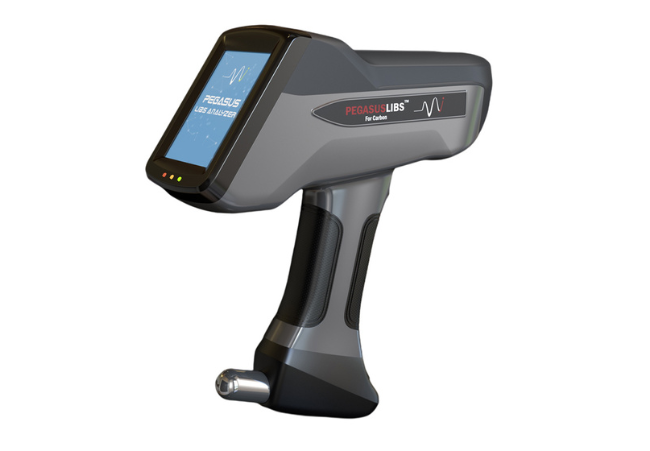


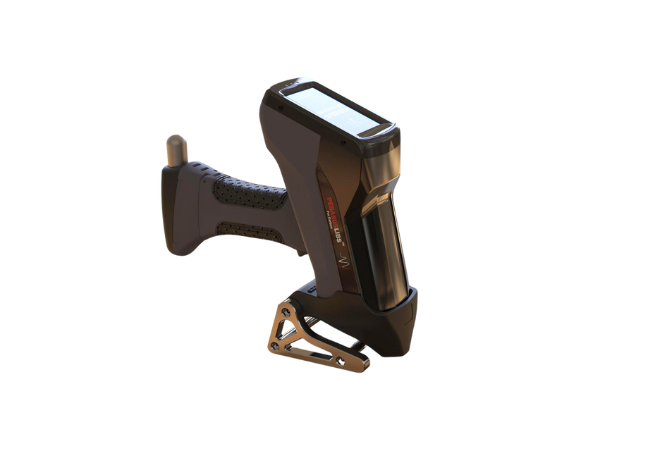
LIBS-JELA-CARBON
JELA-CARBON LIBS ANALYZER can detect the carbon content of quality control (QC) in the manufacturing industry. Users can safely and easily verify materials directly on site and obtain laboratory-level test results and accuracy. The main advantage of this advanced design is its excellent long-term stability, repeatability and accuracy, making Peggs an important tool for stainless steel material testing.
- DATASHEET
- Scope of delivery
| Laser Technology | Passively Q-Switched Lasers |
| Laser Safety | Class 3B, 1064nm |
| Spectral parameters | <0.2nm resolution, 250~415nm Spectral range |
| Alloy matrix | Stainless steel Alloy steel Carbon steel |
| Measureable elements | Aluminum, carbon, cobalt, chromium, copper, iron, manganese, molybdenum, nickel, silicon, titanium, tungsten |
| Sample shape | Block, thin sheet ~ 0.1mm), arc and other special-shaped surfaces |
| Lower detection limit | 0.01~0.1% |
| Battery | 14.8V, 3250mAh |
| IP grade | IP54 |
| WIFI | IEEE 802.11b/g/n 2.4GHz |
| Bluetooth version | Bluetooth 4.0 (BR+EDR+BLE) |
| Display | 4.0-inch touch resistive screen, 320*480 resolution |
| Memory | 16Gb |
| Dimension (L*W*H) | 280*90*150 mm |
| Weight | 3.96 pounds (1.8 Kg) including battery |
Main Unit *1
Portable Bluetooth printer *1
Silicone protective cover for the body *1
Leather protective cover (heat preservation) *1
Desktop metal bracket *1
Special test tooling for bending samples *1
Special tooling for welding rod testing *1
Safety rope *1
Case box *1
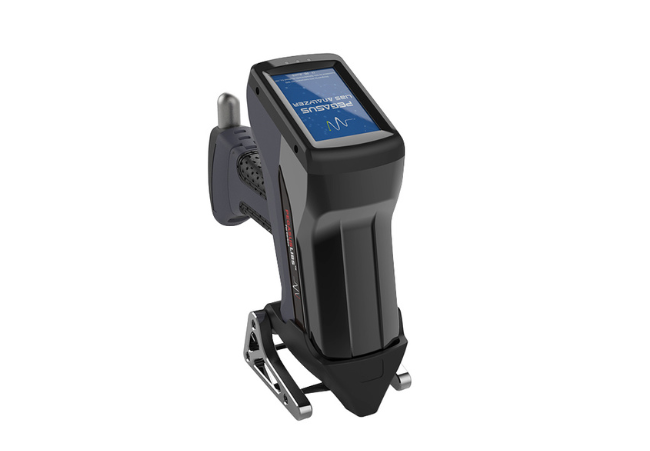
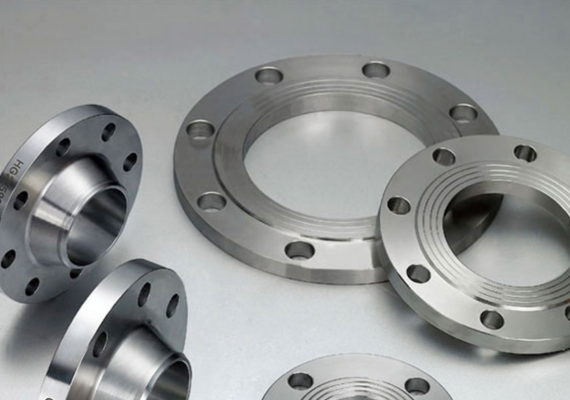
The allotropy of pure metal Fe is the basis of phase transformation during heat treatment, but it does not improve much on the mechanical properties of the material. The introduction of carbon element makes pure metal iron form a solid solution and obtain solid solution strengthening. The appropriate amount of carbon can also form alloy compounds.
The effect of carbon content on the mechanical properties of steel structure in equilibrium: when the carbon content of the steel is lower than 0.9% (mass fraction), as the carbon content increases, the strength and hardness of the steel rise linearly, and the plasticity and toughness continue to decrease; when the carbon content is greater than 0.9%, due to the appearance of secondary carbide network, the plasticity and toughness of the steel are further reduced, and the strength is also significantly reduced. Therefore, in order to have sufficient strength and certain plasticity and toughness, the carbon content of the actual steel is generally not more than 1.3%~1.4%.
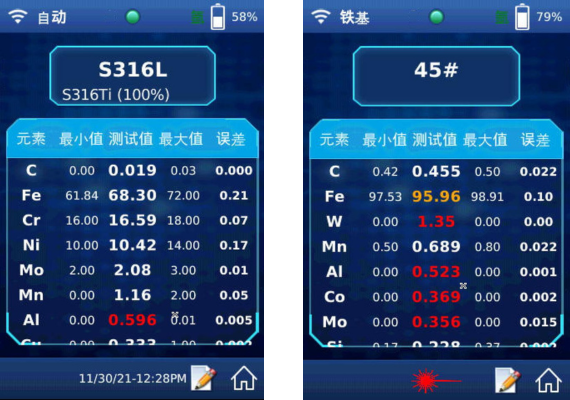
Carbon is also one of the main elements of industrial steel. The performance and structure of steel depend to a large extent on the content of carbon in the steel and its distribution. The influence of carbon is particularly obvious in stainless steel. For example, the carbon content in 316L stainless steel cannot be higher than 0.03.
Therefore, the quantitative detection of carbon in metals is of great significance in industrial production. Any manufacturer or end customer who has requirements for product quality will require quantitative detection of carbon in parts. At present, the more common carbon measurement equipment includes infrared carbon sulfur analyzer, OES direct reading spectrometer, OES portable direct reading spectrometer, and handheld LIBS spectrometer. The latter two types of equipment that can be used for rapid on-site application are currently only imported brands and are expensive.
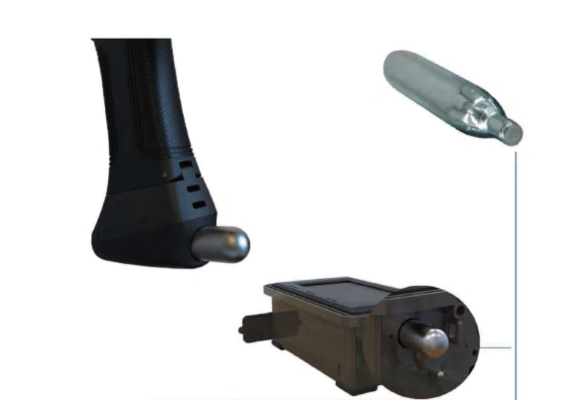
Micro Argon Cylinder
In carbon measurement applications, argon is the most important consumable auxiliary gas. The Peggs portable laser carbon analyzer is equipped with a micro argon cylinder that can perform approximately 100-200 measurements. You can also use a 250 ml, refillable argon cylinder, which we will provide with a professional cylinder stand. This 250 ml cylinder can support up to 3000 measurements.